
Writing Analytics
What Is Writing Analytics?
Writing Analytics is a web-based writing tracker and productivity platform designed to help writers build consistent writing habits, track progress, and stay motivated across projects. It is suitable for authors, bloggers, students, and professionals working on long-term writing goals. The platform focuses on recording writing time, word counts, and other key metrics to help users maintain momentum and achieve writing objectives. Writing Analytics integrates core writing tools with analytics dashboards that visualize performance over time.
Features
Writing Analytics includes a variety of tools and capabilities that support both drafting and long-term project planning:
Writing Tracking and Goals
-
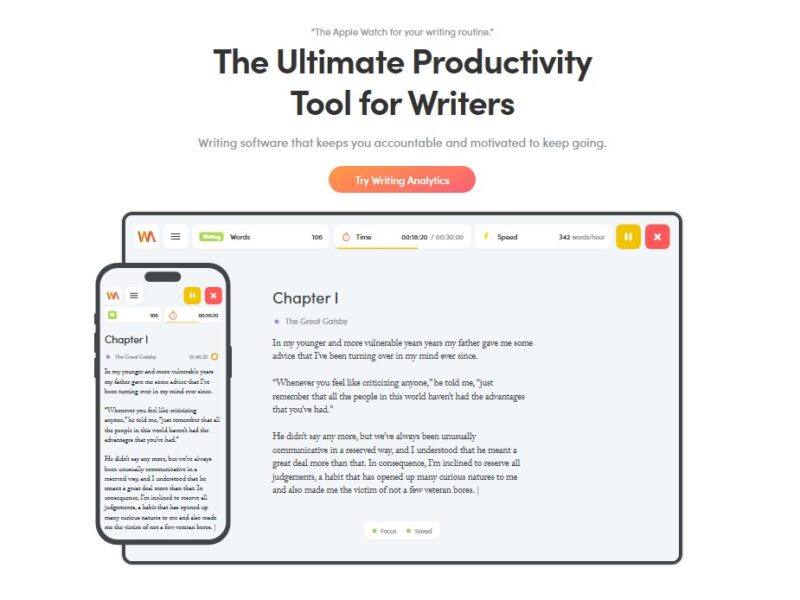
Track word count, time spent, and progress toward writing goals.
-
Set daily, weekly, or project targets with visual feedback.
Analytics and Dashboards
-
Detailed analytics show patterns in writing habits, peak performance times, and streaks.
-
Visual charts and summaries help writers understand their progress and identify trends.
Project Management
-
Manage multiple writing projects in one platform.
-
Organize sessions and monitor advancement on each project.
Collaboration and Accountability
-
Join public or private writing rooms to write alongside others in real time.
-
Share progress with friends or writing partners to build accountability.
Built-In Writing Environment
-
The editor supports Markdown formatting, version history, and fast-drafting mode to minimize distractions.
-
Tools like edits highlighting and dark theme improve focus and review workflows.
Import, Export, and Sync
-
Import work from other applications (e.g., Word or Google Docs) without losing analytics.
-
Sync across devices so users can write anywhere.
Pros & Cons
Pros:
-
Helps writers build consistent habits with data-driven insights and goal tracking.
-
Visual dashboards and analytics make progress tangible and motivating.
-
Built-in session tracking and Markdown support streamline the writing process.
-
Collaboration features create accountability among peers or writing groups.
-
Cross-device cloud syncing ensures access wherever users write.
Cons:
-
The focus on metrics may lead some writers to prioritize quantity over quality.
-
Reliance on internet connectivity is required for analytics and syncing.
-
Lack of deep grammar-checking or AI writing suggestions limits capabilities compared to full writing assistants. (inferred based on core focus as a tracker)
-
Pricing tiers and subscription details may require careful evaluation for budget-conscious users.
Use Cases:
Writing Analytics supports a range of writing scenarios:
1. Authors and Novelists
Set and track daily word count goals to maintain steady progress on books or long-form manuscripts.
2. Bloggers and Content Creators
Monitor output and rhythm across blog posts or newsletters to ensure consistent publishing habits.
3. Students and Academics
Record writing sessions for theses, dissertations, research projects, or essays to build accountability.
4. Freelancers and Professionals
Manage client assignments and measure productivity to meet deadlines and goals.
5. Writing Groups and Communities
Use shared rooms and public progress visualization to collaborate and motivate peers.
Comparison With Other Writing Tools
Writing Analytics differs from many writing platforms by emphasizing progress tracking and habit formation rather than grammar-based suggestions or AI-assisted writing generation.
For example, comprehensive writing assistants like Grammarly, Jasper, or Copy.ai prioritize grammar correction, style refinement, content generation, and AI-assisted drafting. These tools focus on helping users produce polished text or automate parts of the writing process. Writing Analytics, by contrast, focuses on sustained writing behavior and analytics dashboards to visualize productivity habits over time.
While a grammar tool may improve correctness and clarity, it often lacks analytics on user progress or habit patterns. Writing Analytics fills that gap by tracking metrics that help writers stay consistent and reflective about their writing routines.
Writing Analytics is a valuable tool for writers who want to build a consistent writing habit and visualize their progress over time. With features like goal setting, project tracking, analytics dashboards, and collaborative writing rooms, it supports a range of writing goals from novels and blogs to academic research. Its focus on metrics and habit formation distinguishes it from traditional grammar checkers and AI writing tools. Writers looking for accountability and structured progress tracking will find Writing Analytics a compelling choice for boosting productivity and maintaining momentum.
FAQs
1. Can I try Writing Analytics for free?
Yes, Writing Analytics offers a 14-day free trial without requiring a credit card.
2. Will Writing Analytics work on my device?
The platform runs in all major web browsers on desktop and mobile, enabling cross-device access.
3. Can I track work from other editors?
You can manually enter word counts and time spent from external editors to include them in your analytics.
4. Does Writing Analytics claim ownership of my work?
No. Users retain full ownership of their intellectual property.
5. Can I cancel my plan at any time?
Yes, users can upgrade, downgrade, or cancel their subscription at any time.