
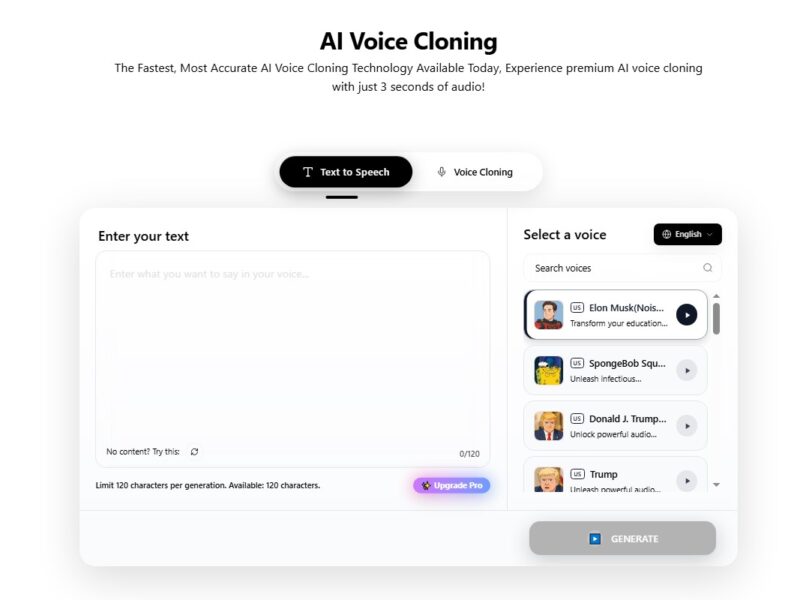
AnyVoice
What is Anyvoice?
Anyvoice is a cutting-edge voice AI platform designed to help businesses, content creators, and developers integrate high-quality, natural-sounding voice synthesis into their applications, websites, and products. The platform leverages advanced machine learning and natural language processing (NLP) technologies to generate lifelike, human-like voices from text. This allows users to create voiceovers, virtual assistants, and personalized voice experiences with ease.
With a user-friendly interface and robust API integration, Anyvoice is ideal for businesses looking to enhance user engagement through voice technology. Whether you’re looking to create voice responses for customer service, voiceovers for videos, or interactive voice applications, Anyvoice offers a powerful and accessible solution.
Features
-
High-Quality Text-to-Speech (TTS): Anyvoice utilizes advanced AI to convert written text into natural-sounding speech, offering a wide range of voice styles, tones, and accents. Users can select from a variety of voices that suit different languages, genders, and use cases.
-
Customizable Voice Profiles: Anyvoice allows users to fine-tune voice characteristics, such as speed, pitch, and tone. This customization ensures that the voice output fits perfectly with the brand voice or specific project needs.
-
Multilingual Support: The platform supports multiple languages and dialects, making it a valuable tool for global businesses and content creators who want to reach a wider audience. It includes support for languages like English, Spanish, French, German, and more.
-
Real-Time Voice Synthesis: Anyvoice offers real-time voice synthesis, allowing users to convert text into speech instantly. This feature is particularly useful for applications requiring quick voice responses, such as chatbots or virtual assistants.
-
API Integration: Anyvoice offers an easy-to-use API that can be integrated into websites, mobile apps, and enterprise software. This allows businesses and developers to embed voice synthesis into their products without the need for complex coding or infrastructure.
-
Voice Customization for Branding: For businesses seeking a unique voice experience, Anyvoice provides options to create a custom voice. This is ideal for companies looking to differentiate themselves through a distinct, branded voice for their products or services.
-
Audio File Exports: Users can download voice outputs in various audio formats, including MP3 and WAV, making it easy to use the generated voice for marketing, presentations, and more.
-
Scalability: Whether you’re a solo creator or a large enterprise, Anyvoice can scale to meet your needs. The platform supports both individual users and businesses, with flexible pricing plans designed to accommodate different scales of operation.
-
Cloud-Based Platform: As a cloud-based solution, Anyvoice is accessible from anywhere with an internet connection. It eliminates the need for on-premise hardware or complex installation processes.
Pros & Cons
Pros:
-
Natural-Looking Voice Generation: The text-to-speech feature of Anyvoice produces high-quality, lifelike voices that sound much more natural than traditional TTS systems.
-
Customizability: Users can adjust voice parameters like tone, pitch, and speed, ensuring that the voice matches the context of the content.
-
Multilingual Capability: The platform supports multiple languages, making it suitable for businesses that operate in various regions and markets.
-
Real-Time Synthesis: The ability to generate speech instantly is ideal for applications like virtual assistants and chatbots that require immediate responses.
-
API Access: Developers can integrate Anyvoice into their existing applications easily using the platform’s API, enabling seamless voice functionality.
-
Flexible Pricing Plans: Anyvoice offers different pricing tiers based on usage, which makes it affordable for both small businesses and larger enterprises.
-
Ease of Use: The platform is designed for ease of use, even for those without technical expertise, making it accessible to a wide range of users.
Cons:
-
Limited Voice Library: While Anyvoice offers a range of voices, it may not have as large a selection as some other TTS platforms like Google Cloud Text-to-Speech or Amazon Polly.
-
Customization Limitations: Although Anyvoice allows for some voice customization, users with very specific needs may find the level of customization somewhat limited compared to other professional TTS solutions.
-
Internet Dependency: Since Anyvoice is a cloud-based platform, a stable internet connection is required to use the service, which could be a limitation in areas with poor connectivity.
-
Basic Support for Non-Standard Use Cases: For highly specialized or niche applications (such as detailed voice modulation for audiobooks or theatrical performances), Anyvoice might not offer enough granular control.
-
Occasional Accuracy Issues: Like most AI-driven systems, Anyvoice may occasionally produce minor inaccuracies, especially with more complex or technical text.
Use Cases for Anyvoice:
-
Customer Support Automation: Businesses can integrate Anyvoice into their customer support systems to create automated voice responses for common queries, improving efficiency and reducing wait times for customers.
-
E-Learning and Educational Platforms: Educators and e-learning platforms can use Anyvoice to generate voiceovers for online courses, tutorials, and instructional videos, making content more engaging and accessible.
-
Content Creation and Voiceovers: Video creators, marketers, and content creators can use Anyvoice to add high-quality, human-like voiceovers to videos, presentations, and advertisements.
-
Virtual Assistants and Chatbots: Anyvoice powers virtual assistants and chatbots by providing them with natural-sounding voices for real-time conversations, making them more interactive and user-friendly.
-
Interactive Audio Guides and Narration: Museums, tourist attractions, and event organizers can use Anyvoice to create audio guides or narrations for exhibits, making the experience more dynamic and engaging for visitors.
-
E-Commerce and Online Shopping: E-commerce websites can enhance the shopping experience by providing voice-based product recommendations or virtual shopping assistants to guide customers through the purchase process.
-
Podcasting and Audiobooks: Content creators can use Anyvoice to generate high-quality voice recordings for podcasts or audiobooks, eliminating the need for professional voice actors.
How Anyvoice Compares to Other Tools?
Anyvoice vs. Google Cloud Text-to-Speech
Google Cloud Text-to-Speech is one of the most advanced text-to-speech services available, offering a wide selection of voices and languages. It also provides some highly advanced features, such as WaveNet voices and custom voice models. However, Google Cloud Text-to-Speech can be more complex to use and may require more technical expertise for integration. In contrast, Anyvoice is designed to be simpler and more accessible, with a user-friendly interface and a focus on fast, easy integration.
Anyvoice vs. Amazon Polly
Amazon Polly is a powerful text-to-speech service that offers a wide range of voices and languages, along with features such as speech marks and real-time speech synthesis. While Polly offers more voice options and greater customizability, Anyvoice focuses on providing a more streamlined, simplified user experience, particularly for users who do not need all the advanced features. Anyvoice also offers competitive pricing and bulk pricing options for businesses, making it a great choice for those looking for an affordable and easy-to-use solution.
Anyvoice vs. IBM Watson Text-to-Speech
IBM Watson Text-to-Speech offers highly accurate and natural-sounding voices, along with advanced features such as voice model training and emotional tone adjustment. While IBM Watson provides powerful customization, it may be more complex for casual users or small businesses to implement. Anyvoice, on the other hand, prioritizes simplicity and accessibility, making it easier for non-technical users to start generating voice content quickly.
Anyvoice vs. ResponsiveVoice
ResponsiveVoice is another popular text-to-speech tool, known for its simplicity and ease of use across a variety of devices and platforms. However, it lacks some of the advanced customization and integration options available in Anyvoice. While ResponsiveVoice offers a broad selection of voices, Anyvoice provides higher-quality, customizable voices and offers more robust API capabilities for developers.
Anyvoice is a versatile and powerful voice AI platform that simplifies the process of generating natural-sounding, lifelike voiceovers from text. With its real-time synthesis, customizable voice options, multilingual support, and easy-to-use interface, Anyvoice is a valuable tool for businesses, developers, and content creators alike. Whether you need to add voice to your customer service applications, enhance e-learning content, or create professional voiceovers for videos, Anyvoice provides a comprehensive solution at an affordable price.
While it may not offer the extensive voice library or deep customization available with some other advanced text-to-speech platforms, its ease of use, speed, and scalability make it an excellent choice for businesses and creators who need high-quality voice AI without the complexity.
FAQs
-
What is Anyvoice used for?
Anyvoice is used to convert text into high-quality, natural-sounding speech. It’s ideal for applications like customer service automation, e-learning, content creation, voiceovers, and virtual assistants. -
Can I customize the voice output on Anyvoice?
Yes, Anyvoice allows users to adjust voice parameters like speed, pitch, and tone to create the perfect voice for your brand or content. -
Is Anyvoice suitable for e-commerce?
Absolutely! E-commerce businesses can use Anyvoice to create product voiceovers, virtual shopping assistants, and other interactive voice features to enhance the shopping experience. -
Does Anyvoice support multiple languages?
Yes, Anyvoice supports a variety of languages and dialects, making it a great tool for global businesses looking to engage customers in different regions.